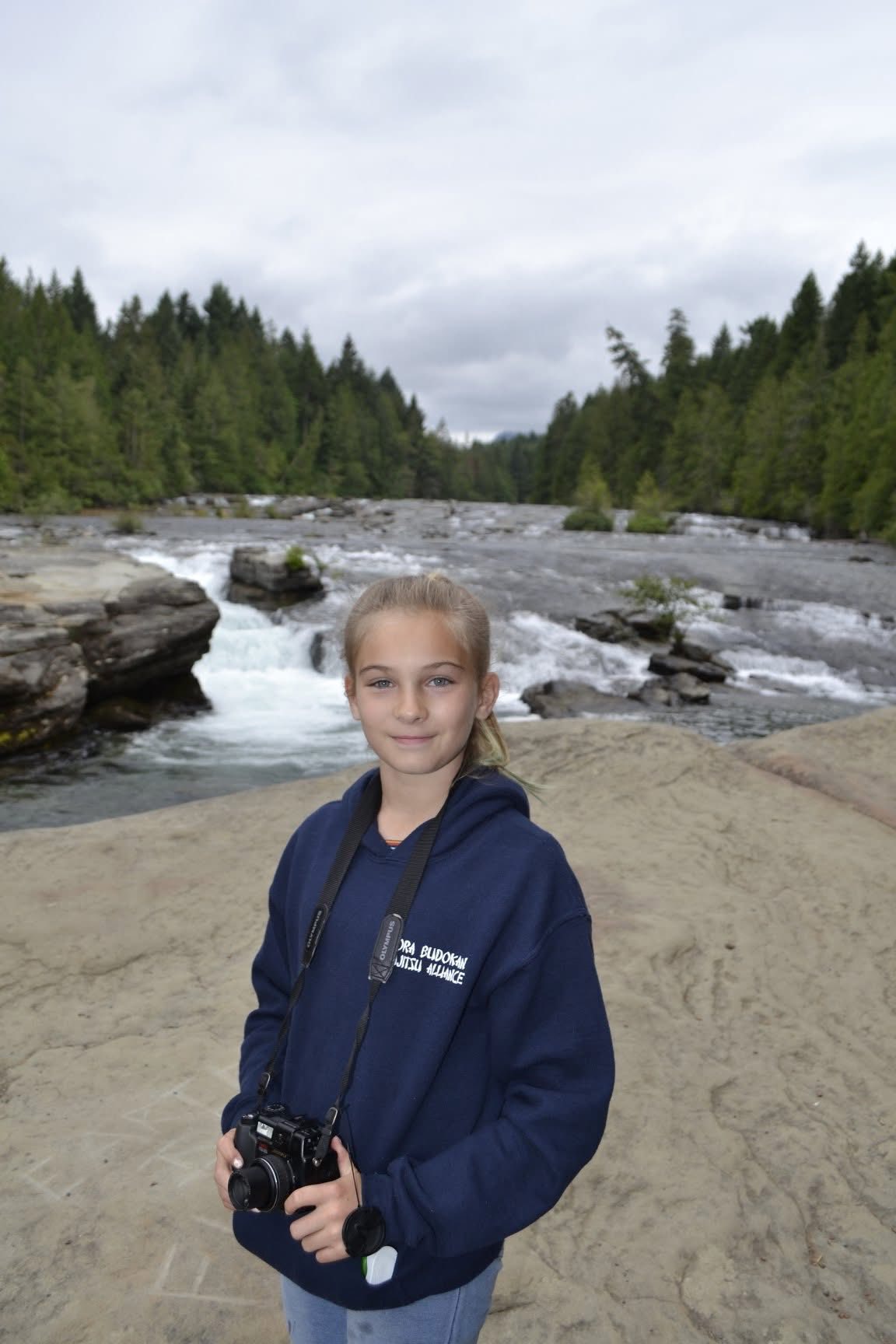
As a student of Thích Nhất Hạnh’s engaged Buddhism, I believe in transforming my grief and sadness into positive change. I have looked deeply into my sadness and grief. I choose to transform it into positive change for other children and families. I am currently walking calmly, methodically and professionally on a path to Felicity's Truth. For Felicity. - David Donovan (Felicity's Dad)
In an attempt to stop our search for answers, Kevin Smith (Farris LLP), lawyer for Surrey School District 36 has filed second Section 43 complaint with the Office of the Privacy Commissioner, characterizing our family’s efforts to understand the circumstances surrounding Felicity’s death as “frivolous.”
For Indigenous families, this tactic is familiar. When questions expose uncomfortable truths, systems often respond not with transparency, but with process, used as a shield to silence, delay, or exhaust those seeking accountability.
Our search for answers continues. It is not frivolous. It is necessary.
Truth matters. Accountability matters. Indigenous children matter.
Multiple MLAs, MPs, unions, local governments, Indigenous organizations, and Felicity’s own Abenaki Nation expressed support for an independent, transparent safety review.
The review that resulted was later described by School District 36, in a sworn court filing, as having been conducted for the purpose of obtaining legal advice.
This means the KPMG “review” is not independent, not transparent, and not accessible to families or the public.
The outcome does not match what supporters believed they were advocating for.
School District 36 has retained two separate external law firms in connection with Felicity’s case. Farris LLP (Kevin Smith and Megan Walwyn) represents the District in its ongoing s.43 application to disregard FOI requests, while Guild Yule LLP (Marie Willcock and Davin K. Wong) represents the District in the civil lawsuit filed in the BC Supreme Court. The engagement of separate firms for FOI matters and litigation indicates the District is treating both processes as significant and high-risk.
In its own filing to the Office of the Information and Privacy Commissioner, the District states that “Felicity’s passing prompted the District to seek advice to review its suicide prevention framework,” which included retaining KPMG Law LLP to conduct an internal review. This connects the privileged KPMG review directly to the timeline of Felicity’s death.
Our FOI requests specifically seek records showing whether Felicity’s case influenced the content or scope of the KPMG review, including inputs, communications, and drafts. Any responsive records will be published here as they are received.
Both Fraser Health and School District 36 have now filed their official responses to our Notices of Civil Claim (Fraser Health / Surrey School District). These responses contain numerous statements that directly contradict their own documented records, published policies, and internal communications.
Over the coming weeks, a new section will be released outlining more than 350 provable falsehoods and inconsistencies across both defendants’ filings, each supported by original emails, FOI disclosures, metadata, and contemporaneous evidence.
This work continues the path toward Felicity’s Truth: a clear, documented account of what happened, what was denied, and what must never be allowed to happen again.
The First Nations Health Authority (FNHA) has made repeated public commitments to reduce suicide among First Nations youth. These commitments span more than a decade and appear in foundational FNHA publications, including their wellness agendas and population health reports. Felicity was exactly the kind of Indigenous youth these commitments were supposed to protect. This section examines FNHA’s promises, the documented targets, and where those commitments stand today.
In the First Nations Population Health & Wellness Agenda – Summary of Findings (2019), FNHA set a measurable suicide-reduction goal:
“The PHWA target is to reduce Status First Nations youth/young adult deaths by suicide by 40% in the next 10 years.”
Source: FNHA Population Health & Wellness Agenda (2019)
In the Indigenous Health & Well-Being Report (2018), FNHA reaffirmed an earlier target under the TCA:FNHP:
“The target… is a 50% reduction in the gap in youth suicide rates between First Nations and other BC residents.”
Six years into FNHA’s 10-year suicide-reduction period, there is no publicly available evidence that FNHA is tracking, updating, or reporting progress toward the 40% reduction target. Likewise, the earlier 50% gap-reduction goal is no longer referenced in FNHA’s more recent reporting.
FNHA annual reports from 2020–2024 do not include:
There is no publicly available evidence of:
Felicity’s experience demonstrates that FNHA’s stated commitments did not translate into adequate services. Despite being an Indigenous youth at identified risk, her FNHA-funded supports failed to provide continuity of care, cultural safety, or proper risk assessment. These systemic failures contradict FNHA’s own public goals.
On November 18, 2025, the McCreary Centre Society released Raven’s Children VI, the most comprehensive study of Indigenous youth health and well-being in British Columbia. The findings confirm what Felicity experienced and what our family has been documenting for the past two years: Indigenous youth continue to face systemic barriers in accessing mental-health support, are less likely to feel cared for at school, and are at significantly higher risk of suicide.
This report provides deeply important context for Felicity’s death.
The report shows that 10% of Indigenous youth attempted suicide in the past year, compared to 5% of non-Indigenous youth. This reinforces the reality that Felicity, as an Indigenous girl who explicitly asked her school for help, was at known, elevated, and documented risk.
Indigenous youth across BC identified their top priority: ensuring that mental and emotional health services are easy to access, culturally appropriate, and welcoming. Felicity’s experience was the opposite. Her suicide-prevention session was disrupted, she received no follow-up, and no safety planning took place. The failures we encountered reflect a province-wide pattern, not an isolated mistake.
The report shows that Indigenous youth who feel their teachers care about them are significantly less likely to experience despair, loneliness, or suicidal thoughts. Yet only a little over half of Indigenous youth in BC feel that their teachers care. Felicity did not feel supported at school. The adults she trusted to help her did not respond when she asked for support.
Raven’s Children VI shows that protective factors — supportive adults, cultural connection, language, and safe school environments — reduce suicide attempts by nearly half. Felicity was denied these protective factors, both by the school district and the health system.
The report highlights that many Indigenous youth do not feel like they belong at school, and do not feel fully safe there. Felicity’s experience matched these findings. Her disclosures were minimized, inaccurate records were created after her death, and no culturally safe response was offered.
Raven’s Children VI gives statistical and systemic context to Felicity’s story.
It confirms that:
Felicity’s death did not happen in isolation. It happened within a system that Indigenous youth themselves describe as unsafe, unresponsive, and inaccessible.
This report strengthens the call for accountability, change, and truth-telling — not only for Felicity, but for all Indigenous youth who continue to be failed by systems meant to protect them.
This upcoming case study will explore how metadata can reveal whether a document is original, reconstructed, or produced after-the-fact and outline why document provenance matters in FOI, PIPA, clinical practice, and litigation. A brief overview of how misunderstandings around consent forms, recordkeeping, and the scope of counselling services can lead to conflict and why clear professional boundaries matter.
A new one-page analysis (Exhibit O-3) now details how Fraser Health’s Patient Care Quality Office (PCQO) report was altered under the supervision of Risk Management. Internal emails show START Program leadership deferred the drafting to Risk Manager Douglas Clouden — captured in Aldo Bonato’s own words, “I’ve left this in your (Doug's) hands.” The resulting PCQO letter contained multiple false statements later admitted as “errors.”
This exhibit compares the falsehoods in the original PCQO report with the official Fraser Health corrections and reveals the internal chain of command that allowed misinformation to be issued to a grieving Indigenous family.
The case has been refiled with David Donovan as the sole plaintiff, following changes in family circumstances. The new filing narrows its focus to the defendants’ negligence and subsequent cover-up efforts surrounding the death of Felicity Donovan.
Felicity Donovan was a kind, funny, and compassionate 16-year-old Abenaki girl from Odanak First Nation. She loved teaching, caring for younger children, and finding ways to make others smile. When she reached out for help, the systems that promised to protect her failed, but her voice still changed them.
Because of Felicity, Fraser Health was forced to acknowledge a fatal policy gap and create a new protocol to protect other youth in crisis. Her story has already driven systemic change and continues to shine a light on the truth that every child deserves safety, dignity, and care that listens.
Felicity’s legacy is truth, change, and love that refuses to be silenced. Her name will always stand for accountability and hope.